Raise a thinker in an AI world.
Five simple rules, about ten minutes a day, no tech skills needed. Start with the free guide, and get one easy tip in your inbox every Sunday.
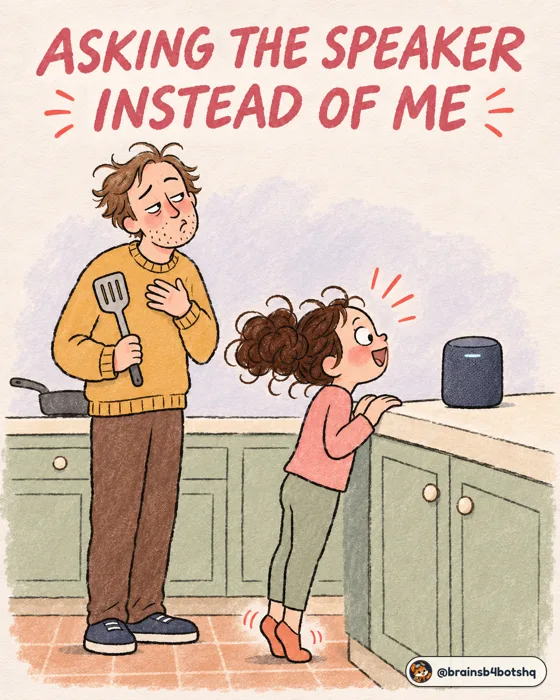
Your kid asked the smart speaker “why?” Before asking you.
- The answer shows up in two seconds, so the wondering never starts.
- “I don’t know” comes faster than “Maybe it’s because…”
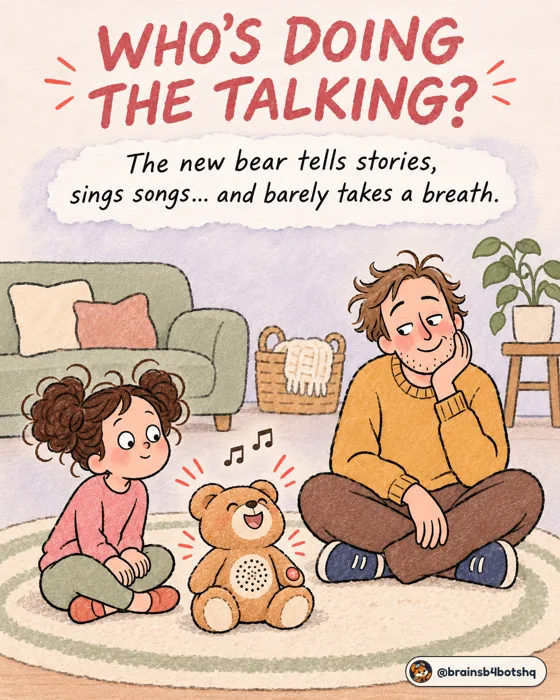
- The toy does the talking, so your child doesn’t have to.
- You’re not sure what to say about AI, so you don’t say much.
Small habits that keep kids thinking
You don’t have to ban screens or become a tech expert. One rule a week is enough.
- 1
Think first, then look it up.
A guess gets the brain ready to learn. The answer sticks better second.
- 2
Pick toys where your child does the talking.
The best toys are mostly quiet, so your child’s voice fills the room.
- 3
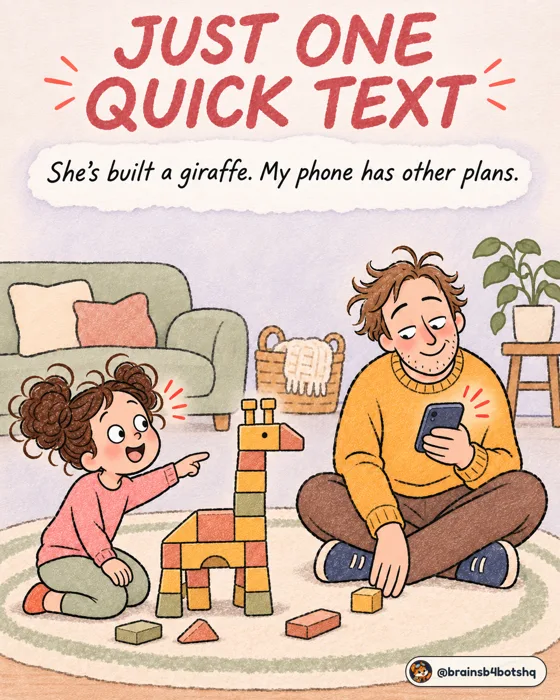
Put your phone down for teaching moments.
The lesson lives in the back-and-forth. Protect it.
- 4
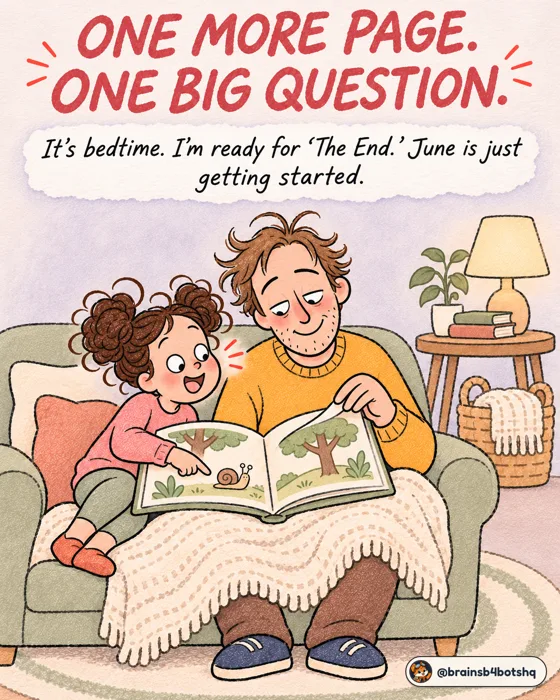
Read together and ask one question.
One pause per book turns listening into thinking.
- 5
Talk about AI early.
It’s a tool, not a friend. Small, honest talks now make big talks easy later.
The question we want every kid to ask: “How do you know?”
No screen bans. Just better defaults.
Each rule is one small change you can make tonight.
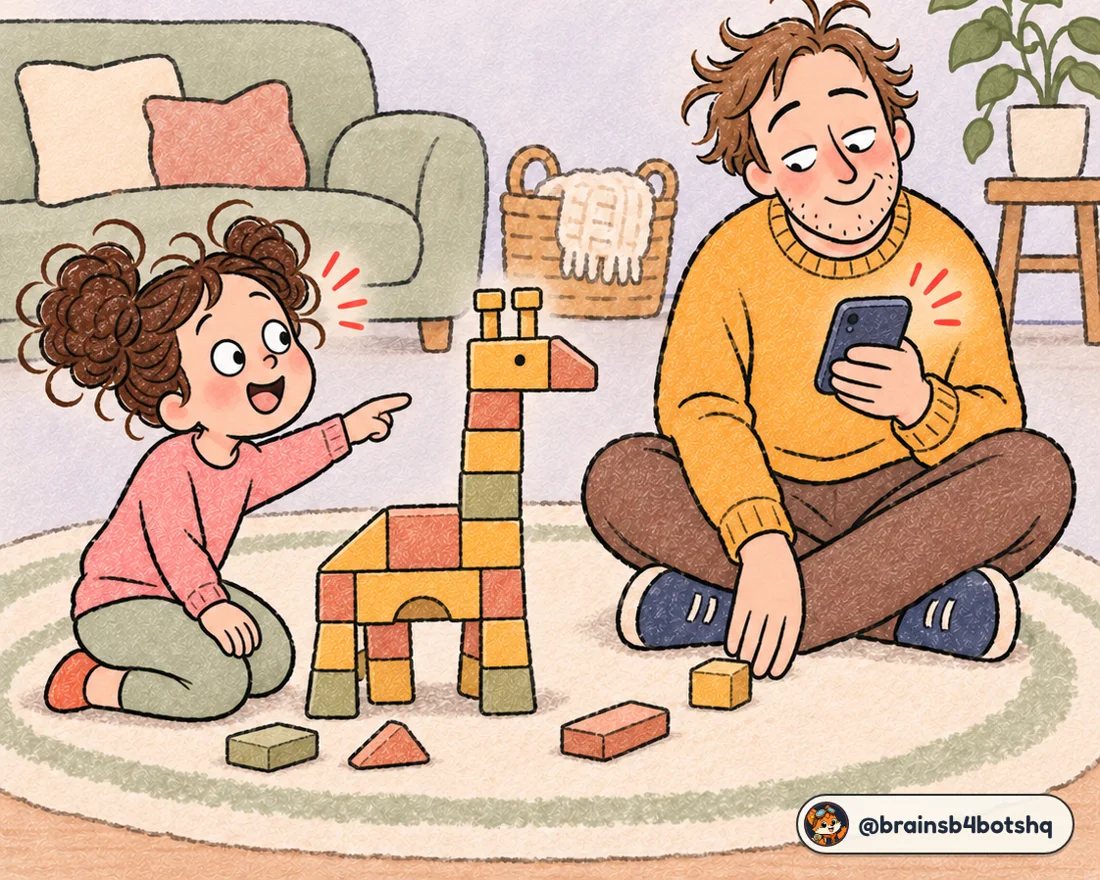
Every week, a new family comic
Real moments from Dad and four-year-old June, and the one small move that turns them around.
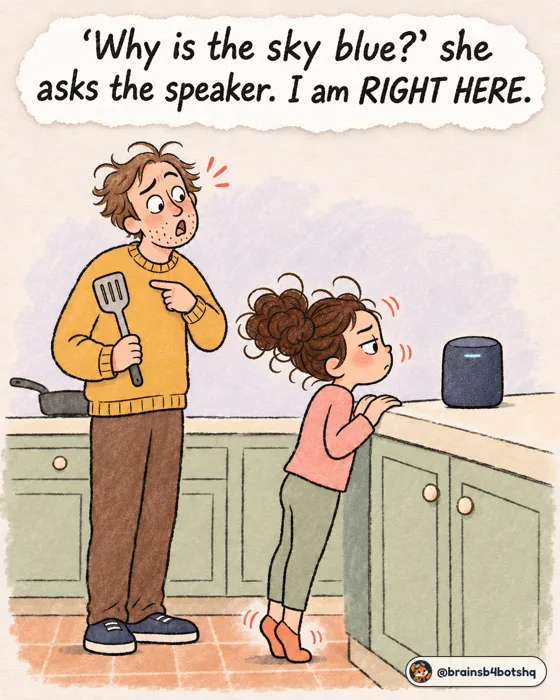
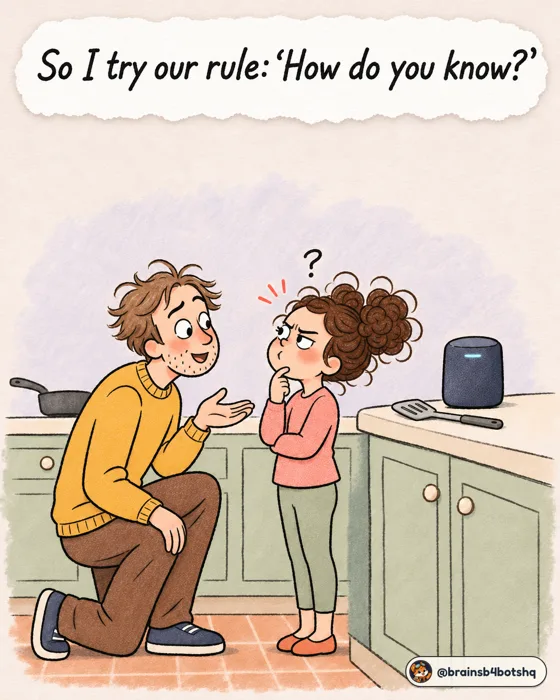
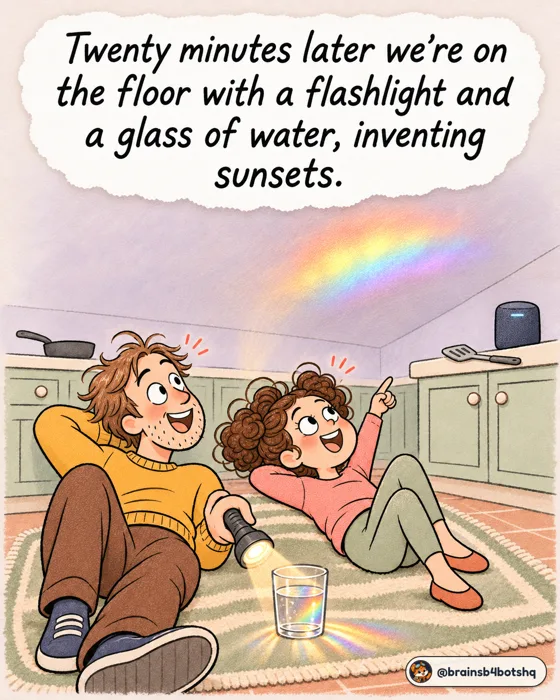
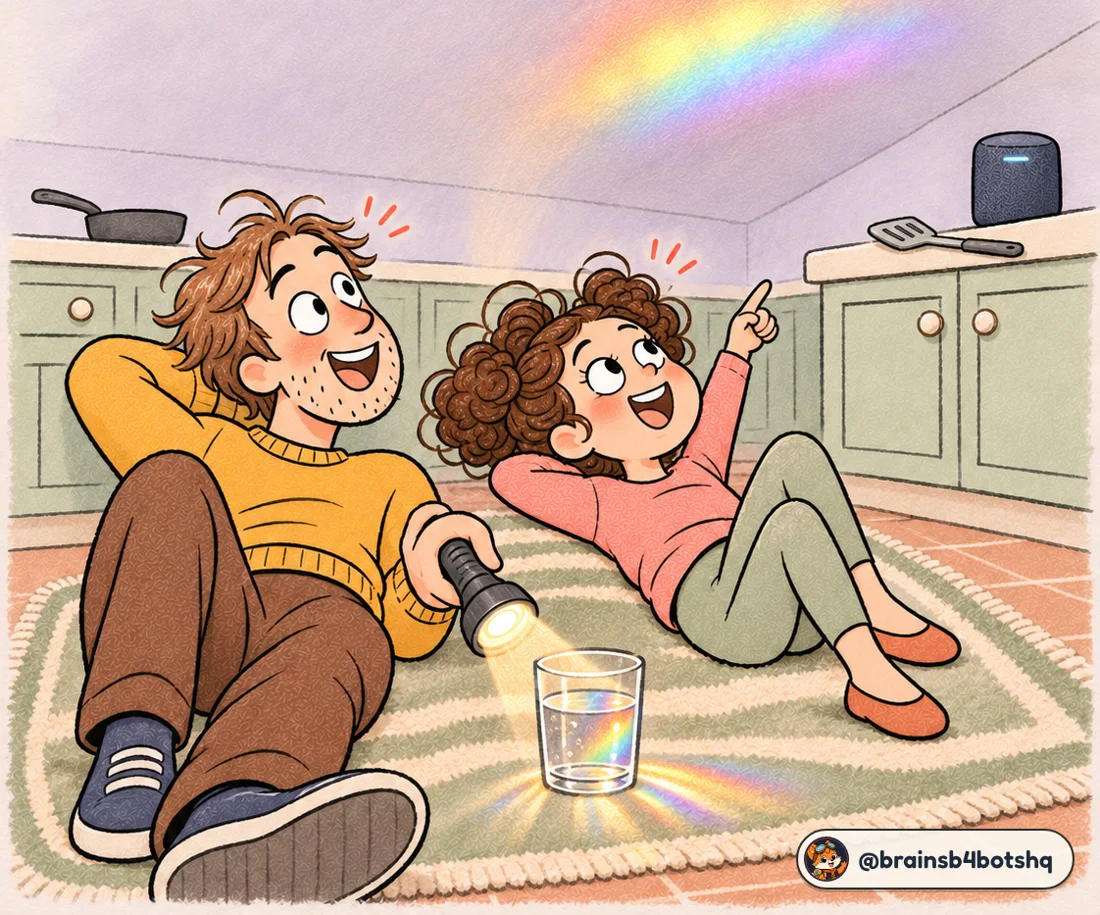
Twenty minutes, one flashlight, zero screens.
More from Dad and June
Built for busy parents
No prep, no apps, no lectures. Just a few minutes that fit into the day you already have.
Get the free guide
All five rules on one page, with the exact words to say. It lands in your inbox in a minute.
Try one rule this week
Start with Rule 1 at dinner or bedtime. Five minutes counts.
Get a tip every Sunday
One short email with a game to play, a question to ask and a family comic.
Flip through real pages. Read the left, do the right.
Every night is one pair of facing pages: what to say on the left, your child’s activity on the right, with tips for ages 3–4 and 5–7.
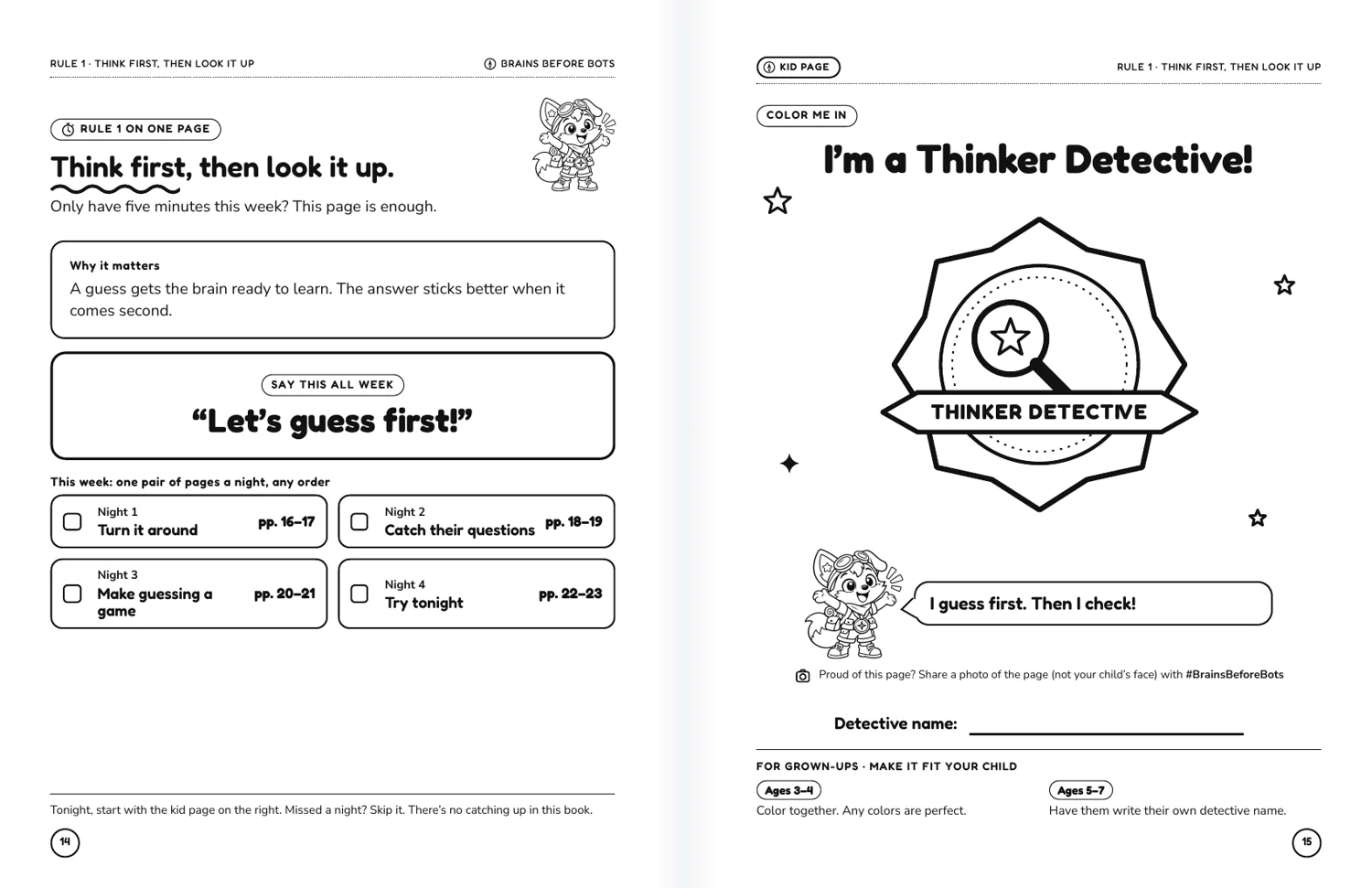
Rule 1 starts with the whole rule on one page, facing your child’s first activity.
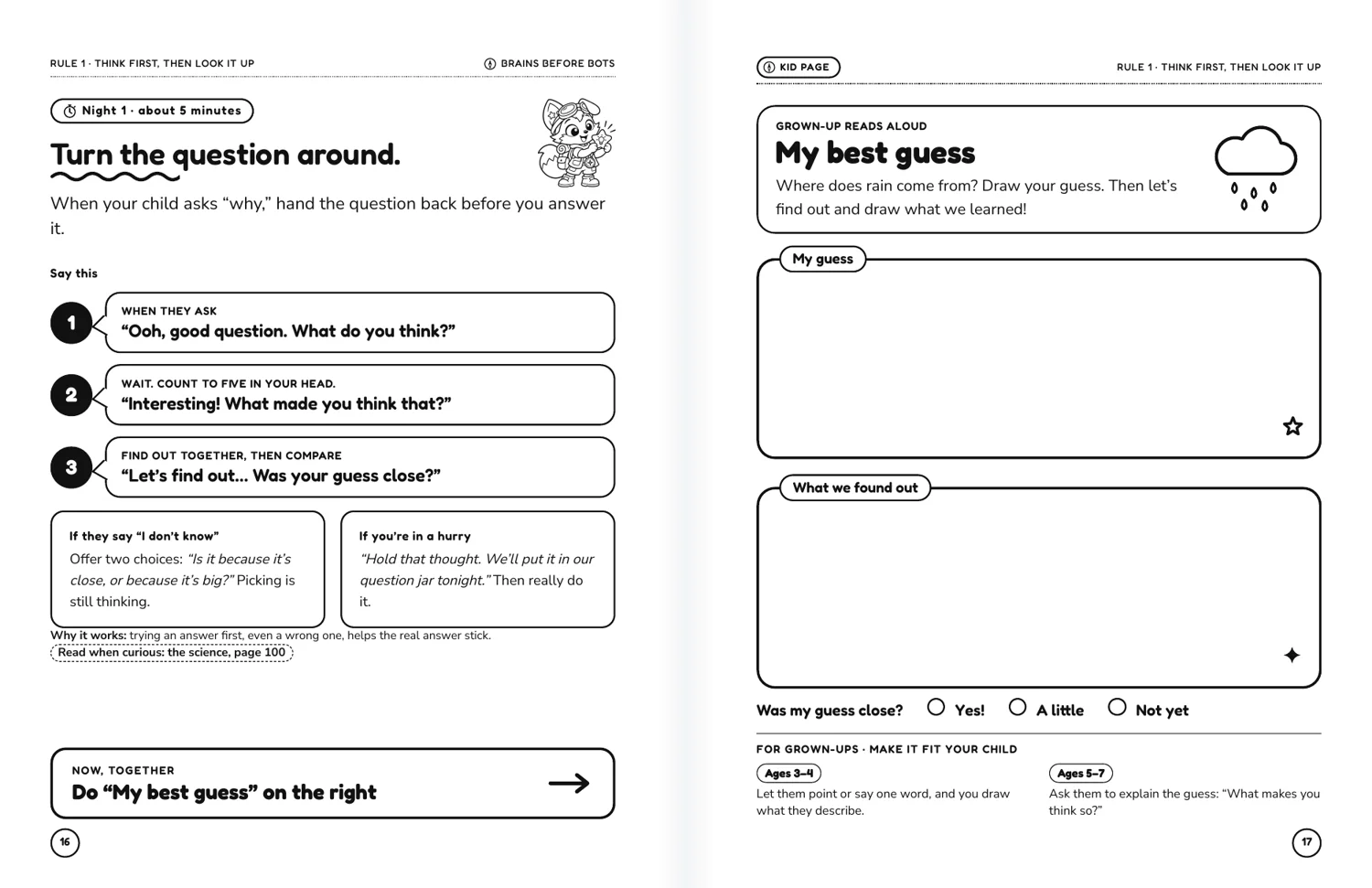
Night 1: you get three things to say. Your child draws a guess, then what you found out.
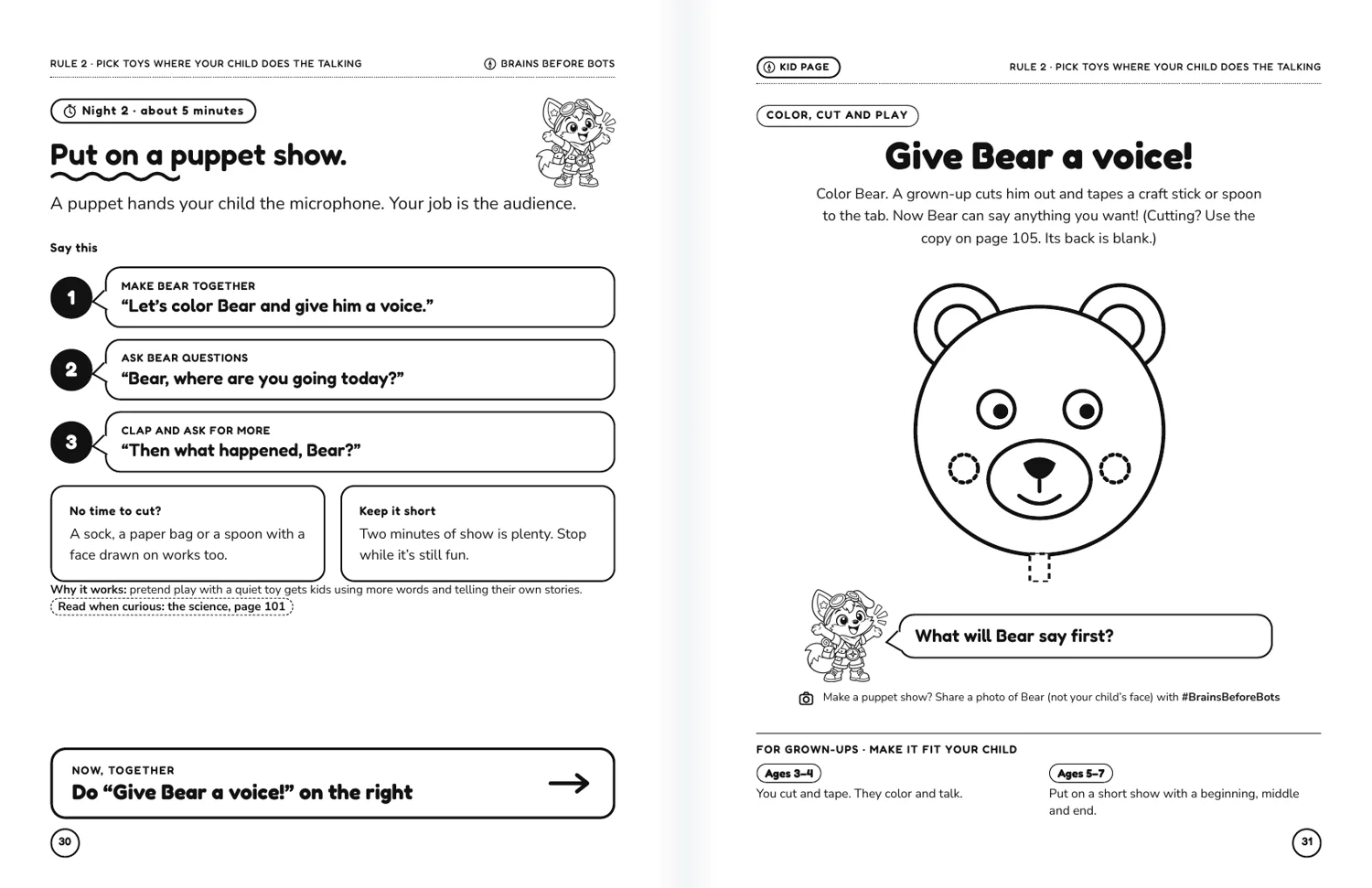
Rule 2: a puppet show. Bear has no voice, so your child becomes it.
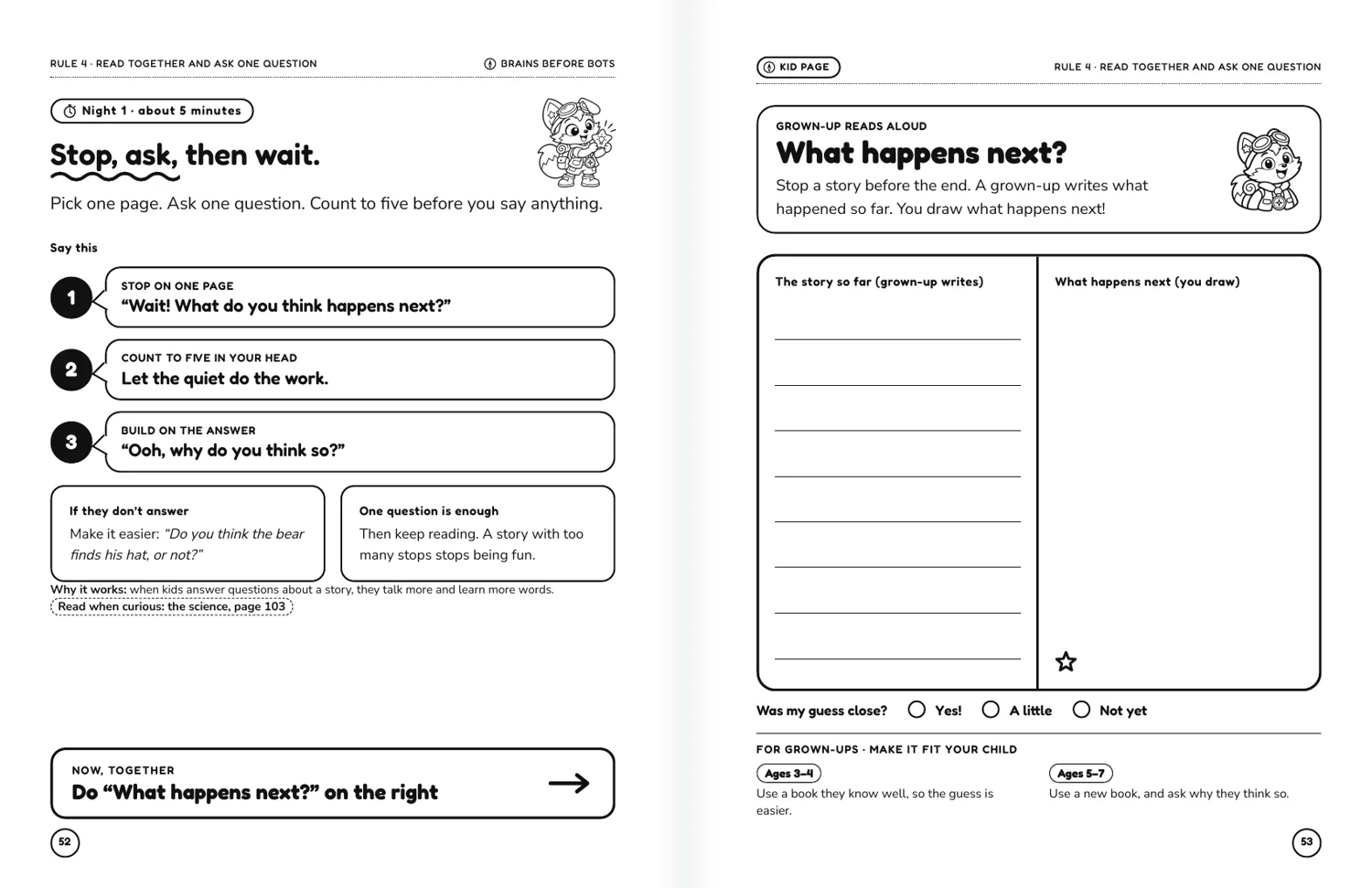
Rule 4: one pause per book turns listening into thinking.
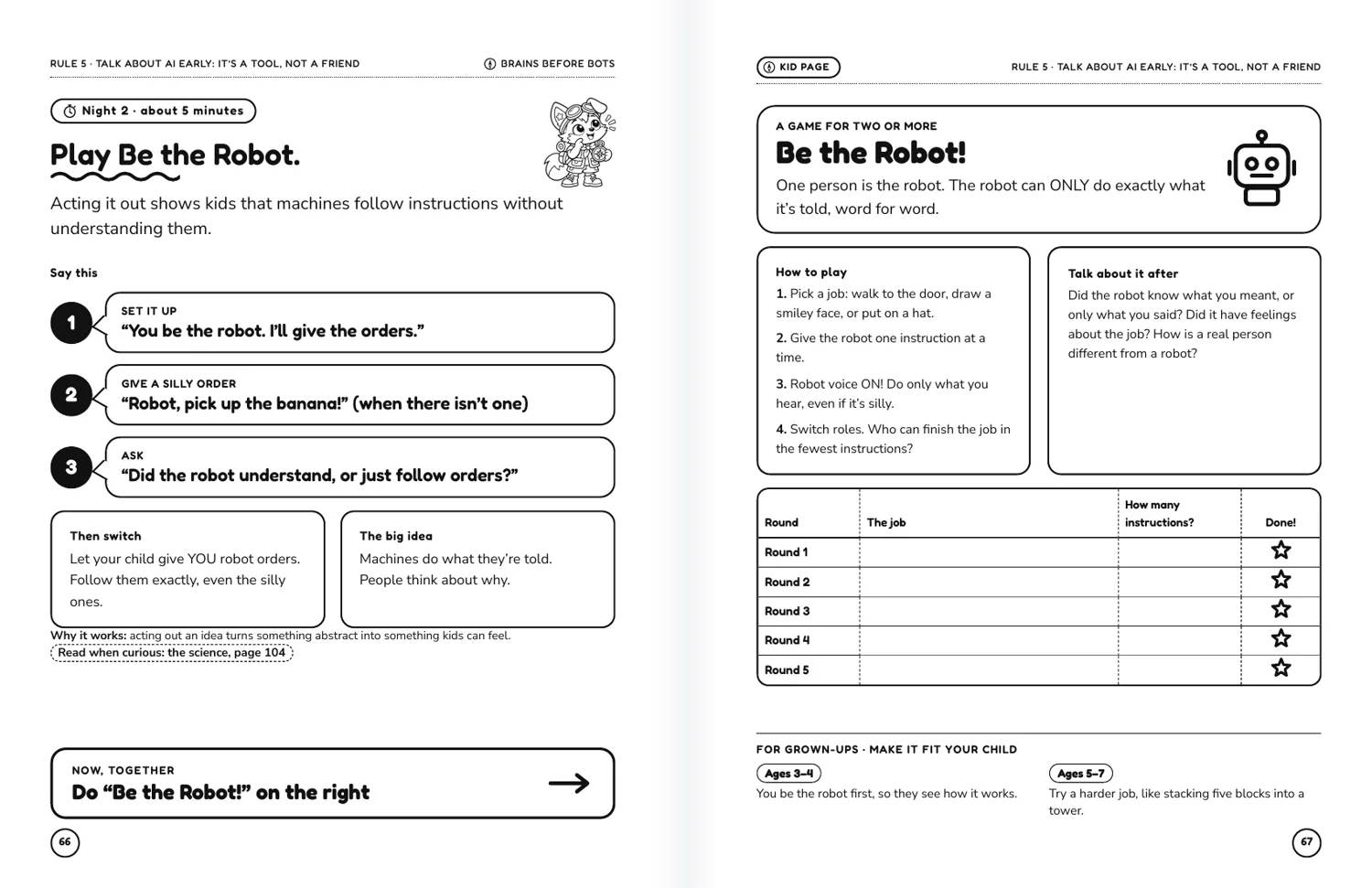
Rule 5: play Be the Robot, and feel the difference between following orders and thinking.
Five weeks, 20 nights, 25 kid pages
One rule a week. Each week has four nights: a page for you, a page for your child.
Think first, then look it up
- Night 1Turn the question aroundKid page: My best guess
- Night 2Catch their own questionsKid page: My own big question
- Night 3Make guessing a gameKid page: Guess, then count!
- Night 4Try tonightKid page: Our question jar
Pick toys where your child does the talking
- Night 1Pass the micKid page: A toy that needs my voice
- Night 2Put on a puppet showKid page: Give Bear a voice!
- Night 3Talk about talking machinesKid page: Person or machine?
- Night 4Try tonightKid page: What could this box be?
Put your phone down for teaching moments
- Night 1Pick your phone-free momentsKid page: Things I want to tell you
- Night 2Face to faceKid page: The mirror game
- Night 3Make it a team gameKid page: Grown-up star chart
- Night 4Try tonightKid page: Eyes on me!
Read together and ask one question
- Night 1Stop, ask, then waitKid page: What happens next?
- Night 2Mix up your questionsKid page: Story question cards
- Night 3Let them tell the storyKid page: My own story
- Night 4Try tonightKid page: How does it feel?
Talk about AI early: it’s a tool, not a friend
- Night 1Name it out loudKid page: What’s inside the talking box?
- Night 2Play Be the RobotKid page: Be the Robot!
- Night 3Make your family AI rulesKid page: My AI rules
- Night 4Try tonightKid page: My helper robot
Tools that last past week 5
- 30 daysThinker challengeOne tiny mission a day, plus a certificate
- FamilyAI agreementYour own rules, signed by everyone
- ScriptsFor hard questions“Is the speaker alive?” and five more
- ExtrasCut-outs, age-by-age guideAnd the science, for when you’re curious
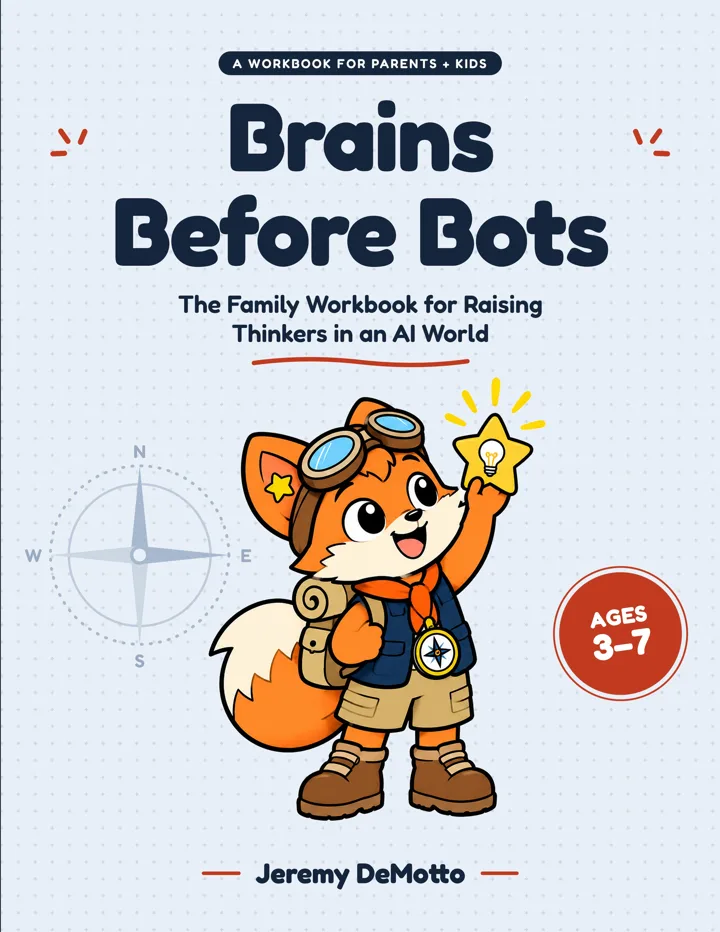
The whole program in one book
Five weeks, five rules, two pages a night. Everything you need is on the page.
- One rule a week for five weeks, then a 30-day thinker challenge
- 25 kid pages, each with tips for ages 3–4 and 5–7
- A family AI agreement and scripts for hard questions like “Is the speaker alive?”
- Short videos for every rule, with Pip’s Corner for kids
Guide subscribers hear first, including the launch-week price.
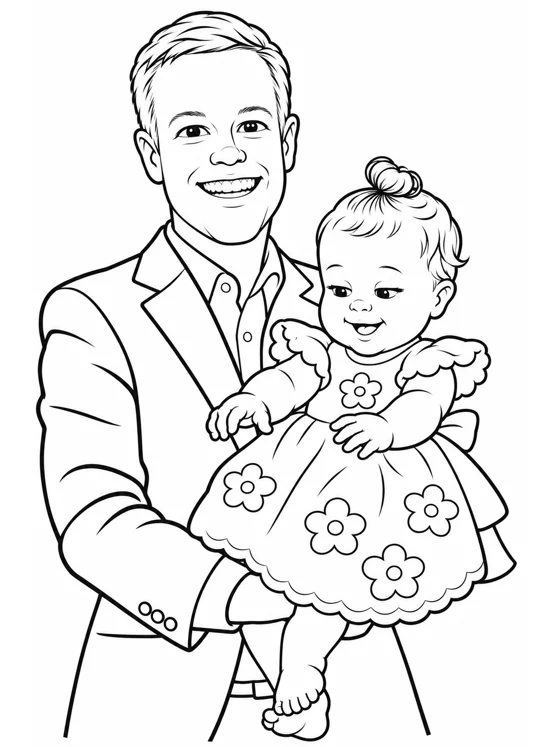
A teacher, a learning designer and a dad
I’ve spent over 20 years teaching, from little kids to adults, and now I design learning for a global company, helping people build AI fluency. My first classrooms were in Seoul, teaching English to preschoolers through sixth graders.
My daughter is two. She’ll grow up in a world where answers are always one question away. My biggest fear isn’t the technology. It’s that she’ll skip the guessing, the wondering and the slow work of figuring things out. So I’m starting now, with five simple habits.
What parents are saying
“QUOTE 1”
“QUOTE 2”
“QUOTE 3”
Good questions
What ages is this for?
Kids ages 3–7. The parent pages work for any age, and the workbook’s age-by-age guide covers babies through 12-year-olds.
Do I need to know anything about AI?
No. Every page tells you exactly what to say. If you can read a picture book out loud, you can do this.
How much time does it take?
About five minutes a night: two facing pages. On a busy night, say the week’s family phrase once. That counts.
Is this anti-technology?
No. It’s about order: brains first, then bots. Kids practice guessing, wondering and checking, so they can use AI well when they’re older.
What’s in the free guide?
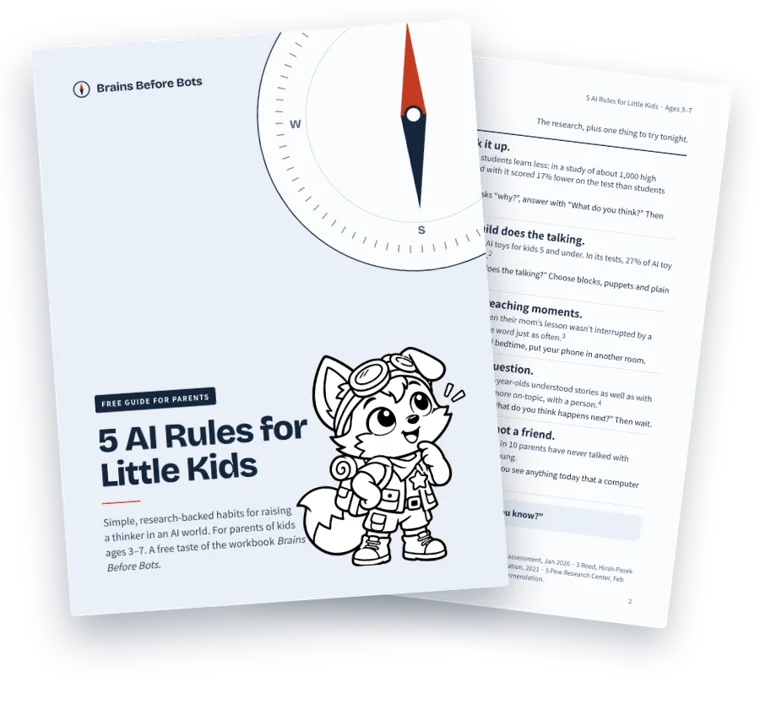
The five rules with the research behind each one, one thing to try tonight for every rule, and a peek at the workbook. It arrives by email in about a minute.
When does the workbook come out?
January 2027, as a paperback on Amazon. It’s $16.99, or $12.99 during launch week. Guide subscribers hear first.
Is there a Korean version?
The free guide comes in English and Korean. Email [email protected] and we’ll send you the Korean one. The workbook is in English for now.
Will you share my email?
Never. You’ll get one short email on Sundays, and you can unsubscribe anytime.
Comics, tips and Pip, every week
Find us as @brainsb4botshq. Comment THINK on any post to get the free guide.